
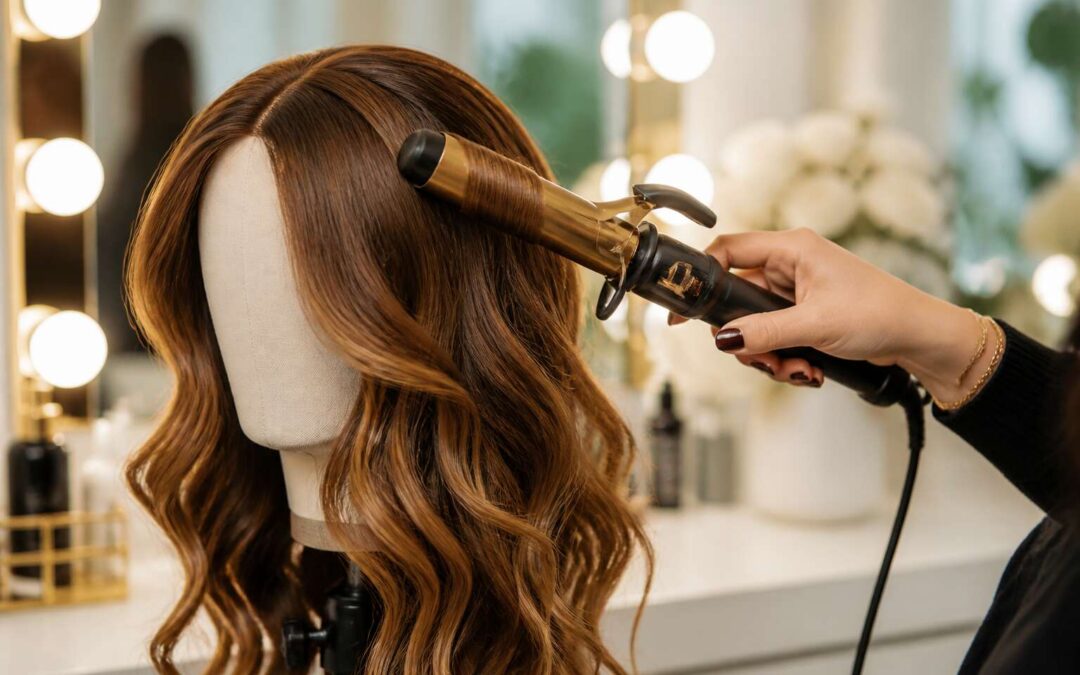
Assessing Whether Your Wig Can Be Curled
Identifying Genuine Human Hair vs. Synthetic
Assessing whether your wig can be curled begins with identifying what your strands truly are. Genuine human hair holds a curl beautifully because its cuticle structure responds to heat. Synthetic fibre, however, will singe or melt, which is why the question of can human hair wigs be curled matters long before you reach for the tongs.
Run these simple checks:
- Pluck a single strand and burn it. Human hair turns to ash and smells like burnt protein. Synthetic melts into a hard plastic bead.
- Examine the shine. Human hair has subtle, natural lustre. Synthetic glows with an artificial sheen.
- Feel the texture. Human hair has slight friction. Synthetic slides like nylon.
Understanding Heat Resistance Ratings
Most wig owners treat heat ratings like a suggestion, until their prized lace front smells like a barbecue. Understanding heat resistance ratings is the difference between bouncy curls and a crispy disaster. For genuine human hair, the safe zone sits between 160°C and 180°C, though premium brands push beyond 200°C. Check the manufacturer’s label, not your intuition.
The question of can human hair wigs be curled hinges on these numbers. Heat resistance ratings list maximum tolerable temperatures, not ideal styling temperatures. A 180°C rating means the strand survives that heat, not that you should park the iron there for ten seconds. Test a discreet inner weft first, then judge the result.
Recognizing Wig Construction and Density
Assessing Whether Your Wig Can Be Curled Recognizing Wig Construction and Density
Heat ratings only tell half the story. The physical architecture of your wig, specifically how the hair is sewn and packed, often decides the final outcome before your curling iron even heats up. A standard weft, where hair is sewn in long, flat tracks, will hold a curl pattern differently than a hand tied lace front. The latter uses individual knots that allow for natural movement, but the base is delicate. You must consider the tension applied to those knots, as heavy barrels can cause unnecessary stress.
Density also plays a defining role. A high density wig, packed to the brim with hair, weighs more and can pull a curl straight within hours. Conversely, a lighter density will allow the curl to spring up with more definition.
– Check for weft stitching that is tight and uniform.
– Look at the cap construction to see if it uses wefts or monofilament parting.
– Assess the heat rating on the specific wig, not the brand average.
The length of the hair matters as well. A 24 inch wig will curl with a wider, looser wave, while a 12 inch unit will give you tight ringlets. The answer to can human hair wigs be curled relies on matching that density and length to your desired style. If you have a thick unit, plan for longer heat exposure and a wider barrel to manage the sheer volume.
Essential Tools and Products for Curling
Choosing the Right Heat Styling Tools
Ask any stylist about whether can human hair wigs be curled and the answer hinges on your tool kit. A cheap crimper is a one way ticket to frizz city, folks. Stick to tools with ceramic or tourmaline barrels. Avoid metal plates that scorch hair faster than a Durban summer.
- Digital curling wand with adjustable temperature
- Flat iron for creating loose waves
- Hot rollers for gentle volume
These tools give you control. Remember, wig hair lacks a scalp’s natural oils. So your technique matters more than the price tag. Invest in a heat protectant spray, and you’re halfway to runway ready curls.
Selecting Heat Protectant Sprays and Serums
The question of can human hair wigs be curled is often answered with a resounding yes, but the real work begins with preparation. Heat protectant sprays and serums are the silent guardians of your investment. Without them, the cuticle lifts, and the hair loses its lustre quickly. You would be effectively damaging the hair with each pass. Heat protection forms a barrier that mitigates the immediate impact. A good formula seals the cuticle, which helps maintain moisture during the styling process.
Consider the ingredients in your protectant. Look for silicones like dimethicone or cyclopentasiloxane. These compound evaporate slowly and provide a slick surface for the plates to glide over. For a fine lace front, a lightweight spray is often sufficient. For coarser units, a heavier serum distributes the heat more evenly.
Here are the essential properties to check for in your product:
– Thermal barrier up to 230°C
– Humectants to retain moisture
– Lightweight non-greasy finish
– UV filters for sun damage
A spray tends to be versatile, while a serum offers more drag control for sleek styles. When you ask can human hair wigs be curled safely, the answer often depends on the product you choose just before switching on the iron. This step prevents the hair from snapping and maintains the integrity of the root structure.
Using Curlers, Rollers, and Flexirods
For those who prefer heatless methods, the question of can human hair wigs be curled finds a different answer. Flexirods and foam rollers set waves overnight without exposing the cuticle to direct heat. The process demands patience, but the payoff is a bounce that looks entirely natural.
When choosing your tools, the diameter of each roller matters significantly. A smaller rod packs the strand tighter, while a wider barrel allows the hair to fall in softer loops. The texture of the wig also plays a role, so match the tool to the density of your unit.
- Small flexirods create tight ringlets
- Medium rollers produce defined curls
- Large Velcro rollers deliver loose, glamorous waves
A satin wrap holds everything in place while the set dries. Lace fronts benefit greatly from this method, as it limits stress along the hairline. Heated rollers are a faster alternative, offering moderate warmth that shapes the hair without scorching.
Setting Up Your Styling Station
Before you even consider whether can human hair wigs be curled, your workspace determines the outcome. A dedicated styling station needs proper lighting, a heat resistant mat, and a secure wig head that clamps firmly to the counter. Without these, every strand becomes a struggle.
Sectioning clips are non negotiable for keeping treated strands separate from untouched ones. A fine tooth comb helps create clean parting lines. Keep a spray bottle filled with lukewarm water nearby, as hydration levels affect how the cuticle responds. I always place my tools in order of use, left to right, so nothing interrupts the flow.
- Tail comb with metal prongs for precise sections
- Rat tail clips to secure each curl pattern
- Cotton towel for blotting excess moisture
The question of can human hair wigs be curled becomes simpler when your station mirrors what a professional salon uses. Everything within arm’s reach, every tool assigned a place, and the wig anchored so it cannot shift mid process.
Effective Curling Methods for Human Hair Wigs
Curling with a Curling Iron: Technique and Temperature
The question of can human hair wigs be curled is one that wig owners approach with trepidation. It can be, provided you respect the material. Human hair responds to heat, which is exactly why it looks so convincing on your head. Recklessness, however, shows immediately.
Temperature is the entire game. Fine strands will protest above 160 degrees Celsius. Coarse, thick hair can tolerate 180. Test a hidden strand beneath the cap before committing to the visible crown.
- 160°C for fine or chemically processed hair
- 170°C for average texture
- 180°C for coarse hair
I keep the iron moving in one fluid glide. The wig has no nerve endings, so it will not warn you when it is burning. Work in small sections and allow the hair to cool completely before brushing. The result will pass any inspection.
Using Hot Rollers for Long-Lasting Volume
The question of can human hair wigs be curled finds a surprising answer in hot rollers. These tools distribute heat evenly through the shaft, which matters for a wig that cannot signal distress. A roller set produces soft, voluminous bends without the sharp creases of an iron. You must let the cylinders cool completely before removing, because the hair remembers its shape only after settling.
For lasting volume, wrap each section away from the face, starting at mid lengths and rolling upward to the root. The cap absorbs heat differently across its surface, so work from the nape forward. Smaller rollers tighten the curl, larger ones create gentle body. Twenty minutes yields a result that outlasts other methods. Yes, can human hair wigs be curled with rollers? Absolutely, if you respect the cooling period and match roller size to cap density.
Achieving Waves with a Flat Iron
The flat iron, a tool often associated with sleekness, becomes a precision instrument for sculpting waves when the question of can human hair wigs be curled arises. Unlike a curling wand which creates circular motion, a flat iron offers a more controlled, angular bend. The technique lies in a gentle twisting motion as you glide the plates downward, which forces the hair to fold into a wave pattern rather than a tight coil. This method produces a more modern, beachy texture that is difficult to achieve with other tools.
The key is the speed of the pull. A slow drag may not set the hair properly, while a swift, decisive motion creates a distinct ridge. You must maintain steady tension on the section to prevent the hair from buckling between the plates, which would cause an unsightly kink. The temperature should be kept moderate, as the wig lacks the natural oils of a scalp that provide a buffer against heat. For a softer bend, you can alternate the direction of the twist for each section, creating a scattered, organic pattern.
Furthermore, the width of the section determines the final look. A thicker section will produce a loose, tousled wave, while a thinner one yields a more defined and uniform pattern. Consider the cap construction, as a wig with a fringe of lace front requires you to work with the grain of the hairline to avoid melting the lace with the hot plates. The hair must be completely dry, as any residual moisture will cause the cuticle to contract too rapidly, leading to frizz. The result is a dimensional, layered wave that moves with the wearer.
For those seeking a structured wave, the following steps offer a reliable framework:
- Part the hair into horizontal sections, starting from the nape.
- Clamp a one inch section between the plates, about two inches from the root.
- Twist the wrist outward 180 degrees while slowly pulling the iron downwards.
- Allow the finished section to cool completely before moving to the next one.
This process transforms the character of the piece, offering a personalized texture that answers the core need: yes, can human hair wigs be curled with a flat iron, provided the technique respects the hair’s structural integrity and the heat rating of your specific wig.
No-Heat Curling with Flexirods and Bantu Knots
To answer whether can human hair wigs be curled without any heat at all, flexirods and bantu knots offer a slow, deliberate path. These methods demand time, something modern styling rarely grants. You set the hair while damp and wait hours for the cuticle to dry and hold the pattern. I have learned that rushing this step only invites frizz.
Flexirods work by wrapping sections around a soft foam core and folding the ends upward. The curl forms gradually, preserving the hair’s moisture. Bantu knots require twisting small sections into tight coils against the cap. Released once dry, they unfurl into a textured, voluminous wave.
Both techniques depend on section size. Smaller portions create tighter definition, while broader ones yield a looser bend. The ritual of setting, waiting, and releasing carries its own satisfaction, a transformation earned through patience rather than force.
Perfecting Spiral Curls with a Wand
The question of whether human hair wigs can be curled often circles back to a fear of damage. I have stood in front of a mirror in Johannesburg, wig pinned to a stand, wand heating up beside me, and felt that hesitation. The answer is simple: yes, but the technique is everything. A wand, specifically one with a tapered barrel, is my preferred tool for creating spirals that mimic natural hair movement. The trick lies in the vertical hold. You take a small section, about an inch wide, and wrap it around the barrel away from your face, keeping the ends tucked neatly.
Here is how the process breaks down:
1. Starting at the nape, clip away the upper layers.
2. Wrap each section with consistent tension.
3. Hold for precisely eight seconds before releasing.
4. Let the curl cool completely in your palm.
I let the hair drop into my hand, and the heat sets the pattern without the weight of the wig pulling it straight. The temperature should sit at 180 degrees Celsius. Anything hotter and the cuticle lifts, leaving a frizzy mess. The speed of your movement matters as much as the heat. Slide the wand through slowly for tighter coils, quickly for a softer wave. After the first pass, I often run my fingers through to break up the curl, which gives a more lived-in finish. The question can human hair wigs be curled, in these moments, becomes less about possibility and more about restraint. Your hands are never working against the hair, but with it, and every spiral is a negotiation between heat and time.
Steaming for Gentle, Springy Curls
The steam hissed through the fabric of my handheld garment steamer, and the answer to can human hair wigs be curled without the aggression of hot plates became clear. Steam works on the internal bonds of the hair shaft, not the outer cuticle. It softens the keratin structure, allowing you to reshape the wig with your fingers or a wide-tooth comb. The smoothness of a steamer is its greatest advantage. There is no scorching, and no metallic barrel pressed against the fiber. The moisture penetrates, and the hair drinks it in.
This method is especially effective for wigs with any level of permanent wave pattern. You hang the wig upside down, allow the steam to rise through the strands, and then coax the hair into springy ringlets. The curls hold a bouncier shape, because the process works from the inside out. I have watched stubbornly straight wigs soften into a cascade of coils, simply by letting the steam do the heavy lifting.
The difference from other methods is the finish. Heat styling offers a crisp result, while steam offers a living one. The hair moves with a natural weight, and the pattern feels looser, more organic. For a human hair wig that has been sitting straight for months, this technique revives the texture.
– Wait for the hair to cool completely before brushing.
– Use a wide-tooth comb, not a brush, to break up the curls.
– Hold the steamer at least twenty centimeters from the wig to avoid saturation.
The water temperature matters, but not in the way you might think. A steady, moderate steam works better than a forceful blast, and it gives you control over the final shape. The curls that form from this process are softer, with less defined edges. They are the kind of curls you see in the morning light after a humid Johannesburg downpour, relaxed and unhurried. The question of can human hair wigs be curled with steam is answered in the way the hair responds to patience rather than pressure. Each section turns under your fingertips, and the wig gains a new memory, one that does not require constant reheating to maintain. It is a quiet kind of transformation, but a lasting one.
Prepping, Protecting, and Aftercare for Curls
Washing and Detangling Before Styling
A staggering 70% of wig wearers report that tangling, not heat, causes their curls to fall flat. Preparation matters most. I wash the wig in lukewarm water with a sulfate-free shampoo, pressing the suds downward through the hair instead of scrubbing.
After rinsing, I apply a nourishing conditioner and detangle using a wide-tooth comb, beginning at the ends and ascending to the roots. For stubborn knots, a leave-in detangler requires three minutes to soften the hair before combing. Rinse with cool water to seal the cuticle, then blot gently with a microfiber towel and allow the wig to air dry.
Can human hair wigs be curled? The answer reveals itself in these quiet steps. Clean strands accept heat evenly, hold curl patterns longer, and resist frizz throughout the day. Smooth, hydrated hair also makes your aftercare simpler, preserving those curls for weeks to come!
Applying Heat Protectant Properly
Heat protectant is the invisible shield between your wig and the curling iron. Before any heat touches the strands, I saturate each section with a lightweight spray, then comb through to distribute the product evenly. The key is layering. One pass of protectant offers basic defence, but two thin coats create a barrier that holds up against 180°C irons. Let the product dry for ninety seconds. Curling damp hair risks steam damage and split ends, which even human hair cannot fully recover from.
After curling, the real work begins. The wig needs to cool completely before you touch it. Sleeping on warm curls flattens them within hours.
- Store the wig on a silk pillowcase or a standing mannequin head.
- Spritz a light finishing mist to lock the pattern without stiffness.
- Refresh curls with a steam-free spritz of water and finger combing only.
Can human hair wigs be curled every day? They can, but the protectant must be reapplied each session. Old product buildup dulls the shine and stops heat from penetrating evenly. Strip it with a clarifying shampoo once a month, then restart the protectant ritual. That discipline is what separates a wig that lasts seasons from one that frays in weeks.
Cooling and Setting Curls to Prevent Frizz
Prepping starts with a bone dry wig. I detangle tip to root with a wide tooth comb, working in two inch sections. Moisture is the enemy. The answer to can human hair wigs be curled safely lies in this dry foundation.
Protecting means two thin coats of heat protectant spray. Let each coat dry for ninety seconds. This barrier keeps the cuticle smooth and stops the iron from scorching the hair.
Cooling sets the shape. After curling each section, I pin the curl to the cap and wait fifteen minutes. Warm curls droop and frizz.
Set the pattern overnight:
- Leave the wig on a mannequin head.
- Spritz water lightly and finger comb.
This locks the curl and blocks humidity. The question of can human hair wigs be curled becomes a daily ritual of prepping, protecting, and respecting the cooling window.
Brushing, Refreshing, and Restyling Curls
The real test of whether the answer to can human hair wigs be curled holds up begins the morning after. You wake up, and the wig sits on its stand, a perfect coil of yesterday’s effort. The first mistake is reaching for a brush. I use my fingers, gently prying apart the curls from the tips upward. A wide tooth comb, only on the wefts, will preserve the pattern. Brushing a curled human hair wig straight through is the fastest way to turn definition into a puffball. I learned this the hard way with a beautiful 12 inch piece in Johannesburg, and the frizz took an hour to tame.
Refreshing requires a shift in mindset. Water is a tool, not a threat. I fill a spray bottle with plain, cool water and mist the wig lightly, just enough to take the limpness out of the strands. Then I scrunch. The motion is quick, squeezing the hair upward toward the cap, coaxing the old curl back to life. If the ends feel dry, a drop of argan oil on my palms, worked through gently, adds shine without weighing the curl down. This daily ritual breathes new life into the style, meaning the answer to can human hair wigs be curled is a firm yes, but only with consistent maintenance.
Restyling changes the conversation entirely. You are not refreshing an existing set; you are starting a new one. The hair needs to be bone dry and prepped fresh with heat protectant. I never restyle a dirty wig, the buildup of oils and product prevents the iron from gripping properly. Instead, I section the hair, and I re-curl from scratch, using the same temperature I trust for the specific density of the unit. The process respects the hair’s memory, too.
1. Mist the wig with water until damp, not soaked.
2. Re-blow dry in sections, using a round brush to smooth the fibers.
3. Apply a thin layer of heat protectant and wait for it to set.
4. Curl each section, holding the iron for no more than eight seconds.
This restyle method keeps the hair pliable and prevents thermal damage. The question of can human hair wigs be curled safely becomes a matter of patience, not luck. Each time you reset the pattern, the hair responds to gentle handling. Rushing the process produces a broken, frayed result, while steady hands produce a bouncy, uniform wave that lasts for days. The routine is repetitive, but the payoff is a wig that looks as fresh as the day you bought it, even after weeks of wear.
Storing Your Wig to Maintain Perfect Curls
Storage is the quiet half of the answer to can human hair wigs be curled. A curl set fails overnight if the wig is shoved onto a shelf or folded into a drawer. The cap needs breathing space, especially under our South African sun.
A tall, ventilated mannequin head keeps the curls hanging in their natural fall. For longer pieces, I let the ends trail over the edge so they don’t compress against the base.
- Keep it away from direct sunlight, which fades colour and dries the cuticle.
- Avoid plastic bags, they trap moisture and flatten the pattern.
- A cool, dry cupboard with a silica sachet works best.
Silk or satin is your ally. I wrap the wig loosely in a satin scarf before it rests on the stand. That layer stops friction from turning defined curls into a tangled nest. This routine is the difference between a wig that lasts a season and one that lasts years, and it is why the answer to can human hair wigs be curled stays a confident yes.