
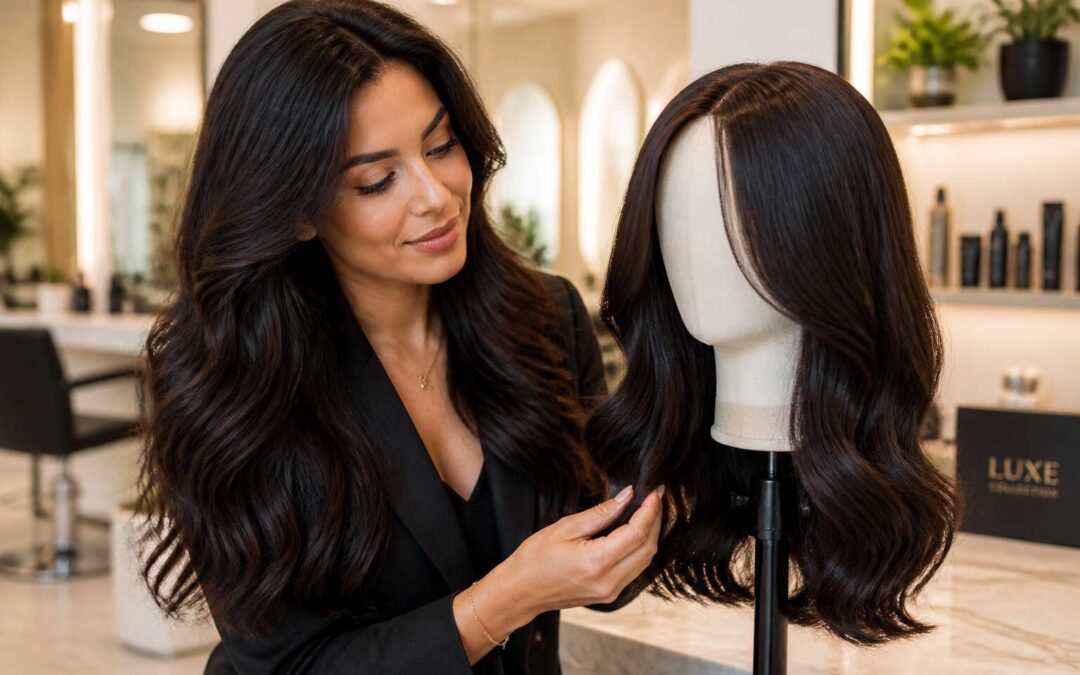
Exploring the World of Wigs
Types of Wigs: Lace Front, Full Lace, and Monofilament
The base of a wig dictates its breathability and styling freedom. For anyone researching hair wigs nz, the distinction between lace front, full lace, and monofilament caps determines whether you buy a temporary accessory or a durable investment!
Lace front wigs feature a sheer lace panel along the hairline, leaving the rest of the cap as a standard weave. This option offers realism at the front while keeping costs moderate. Full lace wigs, however, place the lace across the entire cap, allowing you to part the hair in any direction. That flexibility appeals to South African women who alternate between slick buns and loose waves.
Monofilament tops use a fine mesh that lets each strand be hand tied. The result feels like your own scalp, especially when you run fingers along the crown. It’s a higher tier, often reserved for premium hair wigs nz collections.
Human Hair vs. Synthetic Fibres: Pros and Cons
Few realise that synthetic fibres excel in the rain, a fact that matters in Cape Town’s winter months. Yet the world of hair wigs nz splits over one question: do you want a wig that resists the elements or one that mimics natural hair? Synthetic strands hold their curl, repel moisture, and cost far less upfront. Human hair demands attention, a ritual of washing and oiling, but it moves with a natural weight that synthetic cannot replicate. In my experience, the decision comes down to longevity. A good human hair unit can outlast three synthetic ones. Consider this comparison:
- Synthetic: durable styling with zero effort, though the glossy finish may look artificial.
- Human hair: natural movement and flexibility, but it loses its shape without regular care.
If you search for hair wigs nz, remember that the fibre dictates the character of the wig. Synthetic offers convenience; human hair offers endurance.
Understanding Wig Cap Constructions and Fit
Ever bought a wig that squeezed your skull? That’s a fit failure. When you search hair wigs nz, you’ll see terms like “wefted base” or “adjustable straps.” A cap’s construction dictates where weight sits and how your scalp breathes.
Wefted caps are the standard option. Rows of hair sewn onto strips, lightweight, but prone to flattening at the crown. A 360 lace cap opens the entire top, giving you free parting while keeping the edges intact. The open weft design ventilates heat, though exposed tracks can irritate sensitive skin.
Measure your head before you order. A cap that digs in won’t stretch itself. I’ve learned to distrust any listing without a circumference chart. Fit depends on the base too:
– Combs help on active days.
– Elastic bands adjust to rounder crowns.
– Adhesive bases eliminate slippage but demand adhesive removal.
Many hair wigs nz listings show exact measurements. Use them!
Choosing the Right Length, Density, and Parting Style
The first wig I bought was too dense. It sat on my head, refusing to move. That is the tension of choosing length and density when you search hair wigs nz: the wrong combination reads artificial before styling.
Length changes how weight distributes across the cap. A 22 inch lace front pulls at the nape, while a 10 inch bob stays light. Density controls the hairline. A 130% density hides the cap but flattens natural movement; 80% lets the hair breathe.
Parting style matters. Middle parts demand symmetry, side parts hide asymmetry, and free parting needs transparent lace.
- Longer lengths suit oval faces.
- Shorter lengths balance rounder jawlines.
- High density looks fuller but weighs more.
- Low density moves better and feels cooler.
When you shop hair wigs nz, these choices interact. A dense, long wig in summer heat fails. A short, low density cut requires more styling precision.
Finding the Perfect Wig for New Zealand Conditions
Adapting to the Local Climate and Seasonal Humidity
Auckland’s humidity can turn a perfect wig into a frizzy mess by midday. New Zealand’s coastal weather swings between damp winters and humid summers, which demands more from hair wigs nz. I have seen clients struggle with caps that trap sweat or fibres that absorb moisture. The secret lies in breathability and quick drying properties.
For local conditions, pay attention to the wig’s base and how it interacts with your scalp. A lighter density often feels better during January’s heat. Consider these climate specific features:
- Ventilated caps for airflow
- Lighter density for seasonal comfort
- Frizz resistant finishes for humidity
Seasonal humidity also affects your styling routine. A wig that looks sleek in Christchurch’s dry winter can swell in Wellington’s wet spring. Choose wigs that are pre treated for moisture resistance. This adaptation makes all the difference!
Breathable and Lightweight Options for Warmer Months
Consider a bright January afternoon in Christchurch, where the sun is intense and your scalp feels overheated. The perfect wig for warmer months prioritizes airflow and weight. For hair wigs nz, a breathable base with open wefting allows heat to escape, reducing clamminess. I recommend a density around 120% to avoid heaviness.
Lightweight synthetic blends often outperform heavier human hair in humidity because they dry quickly and resist sagging. A thin lining adds comfort without bulk. When selecting your summer wig, look for these traits:
- Open cap construction
- Ear to ear space for ventilation
- Silicone free linings
My clients in Auckland prefer a longer crown but minimal nape weight. This balance keeps the style breezy while maintaining natural movement. Embrace sheer, breathable fibres for a carefree season!
Wind-Resistant Styling and Secure Fitting Tips
Wellington’s gales taught me more about wig security than any styling course. When the Cape Doctor blows, a wig needs engineering. The wind pushes under the cap, lifting it from the crown. Studying hair wigs nz from Wellington to Dunedin revealed that anchor points matter more than adhesives.
A snug fit begins with the perimeter. Measure your head’s circumference at the hairline and nape. Adjustable straps inside the cap must sit firmly, but not pinch. For extreme weather, use a thin grip band. Prioritize these secure fitting techniques:
- Pin the cap to your natural hair at the temples.
- Use a waterproof adhesive around the ear tabs.
- Position a velvet strip along the nape.
Styling also dictates stability. A shorter crown reduces surface area for the wind to catch. Avoid heavy layers. When I consult on hair wigs nz, I suggest a slight side parting. It redirects airflow around the face.
Protecting Your Wig from UV Rays and Salt Air
New Zealand’s sun is harsh. The UV index spikes even on cloudy days. Synthetic fibres fade. Human hair becomes brittle. Salt air along the coast adds another layer of damage. It dries the cuticle and leaves a gritty film.
Many hair wigs nz options now include UV protective coatings. Some caps block rays better than others. A denser weave offers more shade to the fibres underneath. Beach towns like Mount Maunganui call for a monofilament top. It breathes. It also handles saltwater residue without ruining the base. For anyone comparing hair wigs nz, a leave-in conditioner with SPF adds further defence. Light sprays before heading outdoors make a difference. Reapplying after swimming keeps the fibres supple. Storing the wig in a silk bag, away from direct sunlight, extends its life.
Choosing Wigs Suitable for Active Lifestyles and Outdoor Adventures
Nobody buys hair wigs nz to stay indoors. Kiwis hike the Tongariro Crossing, paddle out at Raglan, and camp in the Catlins. A wig must survive more than brunch. It needs to survive a weekend in the mountains.
I’ve seen too many wigs ruined by a single beach weekend. Salt, sweat, sunscreen, and mud splatter build up. Wigs that handle regular washing without shedding are worth the investment. A cap that holds its shape after being packed into a carry-on makes travel simpler.
Some features to prioritise:
- Perspiration-wicking caps that don’t cling when you sweat
- Fibres with memory that spring back after being crushed under a beanie
- Bases that dry quickly after a sudden southerly drizzle
The right hair wigs nz should match your actual routine. If it restricts movement or demands constant fuss, it won’t last in an active household. Choose based on how you live!
Where to Source Quality Wigs Across New Zealand
Specialised Wig Boutiques in Auckland, Wellington, and Christchurch
In New Zealand, the physical consult still rules. I always instruct clients to bypass big-box retailers and head straight to the specialists! Auckland’s Ponsonby strip has several salons where staff have decades of hands-on experience. Wellington’s Cuba Street boutiques focus on discreet, one-on-one fittings. Down in Christchurch, you will find studios that cater heavily to medical hair loss. These shops stock a wider range of base colours and densities than any online store.
Expect these dedicated spaces to offer:
- Private fitting rooms without harsh lighting
- On-site trimming and custom lace tinting
- Direct trade-in programs for older units
Sourcing quality hair wigs nz hinges on booking an appointment. A good specialist will alter the cap right in front of you. That level of service is rare elsewhere!
Trusted Online Retailers with New Zealand-Based Warehousing
Waiting weeks for an international wig shipment is a guaranteed way to end up with the wrong density. Trusted online retailers with New Zealand-based warehousing solve that pain for buyers across the globe, including those of us in South Africa. Keeping stock local shortens transit times dramatically and simplifies customs. When you search for hair wigs nz, these operators now ship from Auckland within two business days.
Local inventory also changes the returns game. They can inspect and exchange units without cross-continental shipping costs. These distributors typically show several signs of trustworthiness:
- Physical NZ street addresses on their contact pages, never a PO box.
- Free domestic exchanges that cover sizing errors.
- Multiple densities stocked in the same base colour.
These warehouses still ship globally, so a buyer in Cape Town can order hair wigs nz and skip the extended wait.
Custom Wig Makers and Bespoke Services
In a land where sheep outnumber people six to one, you might expect a thriving fleece-based wig industry. Instead, New Zealand’s true artistry lives in its bespoke wig makers, who treat each head as a unique architectural challenge. These craftspeople measure your scalp with calipers, analyse your hairline’s natural rhythm, and then hand-tie every strand onto a cap that fits like a well-worn glove.
Custom services in Auckland and Wellington typically offer:
- Colour blending from multiple European and Asian hair grades
- Hand-knotted density mapping, so your parting looks convincingly sparse
- Adjustable silicone grips for those who surf, hike, or simply sweat in summer
Talking directly with a maker means you can request a soft, breathable base for humid Cape Town days, or a firmer hold for blustery harbour winds. When you search for hair wigs nz, these artisans stand apart because they do not sell off the rack; they grow your solution strand by strand.
Medical and Chemist Suppliers for Therapeutic Wigs
When hair loss turns clinical, the search for hair wigs nz takes a different path. In New Zealand, oncologists hand you a list of approved medical and chemist suppliers, and the careful work of finding a therapeutic wig begins. These providers understand that baldness from chemotherapy or alopecia demands function before fashion.
- Cancer Society Wig Banks, operating in most regions with donated, sterilised options.
- Hospital outpatient pharmacies, stocking lightweight synthetic caps for rapid turnaround.
- Private oncology dispensaries that order human hair units on your behalf.
I have watched a fitter at an Auckland chemist spend an hour adjusting a silicone grip for a patient facing another six rounds of treatment. They sell endurance, not glamour. Locating hair wigs nz through these channels also connects you with scalp care and post-surgical fitting, all within a medical framework.
What to Look for in a Reputable Seller
Across New Zealand, the best hair wigs nz often come from unassuming places. I have found remarkable units in Hamilton styling studios and Dunedin salon backrooms, where fitters spend an hour trimming the fringe while you sip tea. These sellers rarely advertise heavily because they rely on referrals from dermatologists and hairdressers. The moment you enter, note how they listen. A quality seller asks about your sleeping habits, your swimming schedule, even your helmet use during cycling.
When evaluating hair wigs nz, reputable sellers display their stock openly, with visible price tags and fibre samples you can touch. They should explain the difference between a stock cap and a custom order without rushing. Watch for proper sanitation tools, like combs and clips in sterilising solution. If they hesitate to show you the inside of a cap, walk away. Your scalp deserves honesty.
Caring for Your Wig: Maintenance Essentials
Washing and Conditioning Routines for Different Fibres
A wig’s lifespan hinges on one neglected skill: proper cleansing. For those investing in hair wigs nz, the washing routine must align with the fibre’s identity. Human hair demands lukewarm water, a sulphate-free shampoo, and a gentle squeeze, never a twist. Synthetic strands, however, thrive with cold water and a specialised detangling rinse.
Conditioning follows a separate logic. Human hair accepts rich conditioners, left for three minutes. Synthetic fibres reject oil-based products, so a silicone spray suffices.
- Soak in cool water with mild shampoo
- Rinse thoroughly, no rubbing
- Apply detangler, air dry flat
For hair wigs nz owners, the same principle applies to human hair versions, but with warm water and a weekly deep mask. Each fibre responds to proper care, and the rewards are measured in years of wear.
Detangling, Brushing, and Styling Best Practices
Most wig damage begins at the bristle. For hair wigs nz, a wide tooth comb works better than a brush on wet fibres. Start at the ends and work upward in short strokes. Never pull a knot straight through. Those tiny snags become permanent matting when forced. Give the fibres a minute to relax before you begin!
- Detangle from tip to cap
- Hold the base of each strand
- Switch to a boar bristle brush for dry styles
Styling heat requires perspective. Synthetic caps melt; human hair can take moderate tools. A low heat setting preserves the fibre’s memory. Use a wig stand to hold the cap while styling hair wigs nz pieces. This one habit prevents most stretching and distortion over time.
Proper Storage Methods to Preserve Shape and Longevity
Most wig owners replace their hair wigs nz far sooner than necessary, not from wear, but from improper storage. The cap loses its architecture, the fibres kink, and the entire silhouette flattens. A good wig deserves the same respect as a tailored coat.
Every piece benefits from a dedicated stand, whether Styrofoam or velvet. The crown and nape need support to hold their shape. Silk wraps around the wig before placement in a breathable box. Plastic traps moisture, inviting odour and weakening the lace.
- Direct sunlight fades colour and dries fibres.
- Hanging a wig by its cap causes stretching.
- Satin pillowcases reduce overnight friction.
For travel, a hard shell case protects the structure best. Fold along the natural parting line and cushion with tissue paper. Coastal humidity in New Zealand can relax synthetic fibres, so silica gel packets in storage drawers keep things stable. Monthly checks and gentle repositioning of curls extend the life of hair wigs nz dramatically.
Personalising and Styling Your Wig
Trimming and Cutting for a Natural Hairline
A wig’s hairline is its most telling feature, a fragile border between illusion and reality. Few things betray a wig faster than a stiff, symmetrical edge. Trimming and cutting for a natural hairline requires patience and a steady hand.
For those investing in hair wigs nz, the difference lies in details. I prefer small strokes, following the natural curves of the face. Blunt lines read as synthetic, while feathered edges catch the eye as organically imperfect.
The process is about breaking uniformity, not removing length. Snipping tiny V shapes into the lace, or thinning density near the temples, creates a hairline that shifts subtly with movement.
Colour Customisation: Dyeing Human Hair Wigs
Custom colour transforms a wig from a ready-made item into a tailored signature. Human hair wigs nz accept professional dye with fidelity, yet the process differs from treating biological hair. The cuticle of wig hair has already endured processing, so porosity varies along each strand.
Three factors demand attention:
- Test strands in an inconspicuous area first
- Use a lower volume developer to preserve the fibre
- Work in sections to maintain even saturation
Pastel and vivid shades require pre-lightening, which weakens the hair structure. Demi permanent colour offers a safer route for subtle shifts. The lace and knots remain unaffected by dye, yet the hair itself shows strain if overworked. Many buyers of hair wigs nz learn this after their first home colouring session.
Accessorising with Headbands, Scarves, and Hats
Once the colour feels settled, accessories offer relief from the maintenance cycle. A silk headband pressed along the hairline hides growing roots and shields the lace from friction. Scarves provide similar protection during windy days, though the texture matters more than most buyers expect. Rough cotton catches on human hair fibres and creates tangles near the nape.
Hats deserve equal consideration. Wool blends trap heat and compress the cap, flattening the crown over hours of wear. Breathable materials like linen or loosely woven straw allow airflow while preserving the wig’s internal structure. For anyone comparing hair wigs nz, the interplay between accessory weight and cap construction determines whether a style stays secure. Certain pairings reduce pressure points and keep the hairline undisturbed:
- Wide-brimmed hats with low-density caps
- Velvet headbands with monofilament tops
- Chiffon scarves with lace fronts
Working with Professional Stylists for a Seamless Look
Most wig wearers never visit a professional stylist after purchase. That is a mistake. A single consultation can transform a generic wig into a personal signature. For anyone exploring hair wigs nz, this local adjustment is the difference between wearing a product and owning a look.
Stylists bring tools you will not have at home. They steam fibres to relax stubborn waves, pin the cap for a custom fit, and feather the perimeter against your skin. I rarely meet a client who regrets that hour.
- Adjusting the crown for natural volume
- Shaping the hairline to your face’s proportions
- Blending the wig with your own hair texture
One session often eliminates months of frustration.
Daily Styling Hacks for Quick and Easy Changes
For anyone exploring hair wigs nz, daily styling does not need to be a drawn out ritual. The trick is knowing which changes make the biggest impact. A quick change in parting can redefine your entire silhouette. A few seconds with your fingers can break up stiff fibres and create soft, natural movement.
Consider these fast adjustments:
- Flip the wig upside down and shake to reset the volume.
- Use a bristle brush to smooth the top layer only.
- Tuck one side behind your ear for an instant asymmetric look.
Each of these takes under a minute. You will spend less time fussing and more time moving through your day with confidence.
Understanding Wig Pricing and Long-Term Value
Price Ranges for Budget, Mid-Range, and Premium Wigs
The price tags on hair wigs nz boutiques display can unsettle the unprepared. A budget piece may cost under one hundred dollars, while a premium human hair unit can surpass a thousand. The gulf is not superficial. It reflects the cap construction, the fibre quality, and the handwork embedded in every knot.
Budget wigs typically rely on machine-stitched caps and synthetic strands that fray within months. Mid-range pieces introduce lace fronts, monofilament tops, and better parting. Premium options, often crafted from human hair, offer density, natural movement, and a useful life measured in years.
The long-term value emerges when the cost is divided by the number of wears. A cheap wig surviving a single season costs more per month than a quality piece enduring three years. That arithmetic, more than the initial price, should guide every purchase of hair wigs nz customers make.
Comparing Initial Investment with Lifespan and Maintenance Costs
A wig’s price tag tells only half the story. The other half unfolds over months of wear, washing, and styling. When evaluating hair wigs nz, the real question is not what you pay today, but what each wear costs across the wig’s lifetime.
Consider two units. One cheap, one premium. The cheap one may need replacing after a season. The premium one, with proper care, lasts years. Divide the initial investment by the number of wears. Suddenly the arithmetic changes.
Maintenance also shifts the balance. Synthetic fibres demand less upkeep, but degrade faster. Human hair requires regular conditioning, yet holds its shape. Add repair costs, replacement frequency, and styling products. The true expense accumulates differently.
- Assess the cost per wear, not the sticker price.
- Factor in cleaning products and professional maintenance.
- Compare expected lifespan against your usage patterns.
That calculation, more than any showroom number, reveals the genuine value.
Financing Options and Payment Plans Available Locally
Prices for hair wigs nz start near $150 and climb beyond $3,000. A basic synthetic unit and a custom human hair piece sit at opposite ends of that range, with most buyers landing somewhere between. Custom fitting and styling add another layer. The displayed price reflects only part of the expense.
Local financing has shifted how people pay. Most specialist boutiques now offer:
- Payment plans spread over three to six months
- Afterpay and Laybuy at checkouts, both online and in stores
- Interest-free terms from medical suppliers for therapeutic wigs
These options change the upfront burden. A payment plan turns a $2,000 purchase into a monthly commitment that fits a household budget. For many shoppers, the financing terms deserve as much attention as the base cost. Comparing hair wigs nz across stores requires looking at both numbers.
Health Subsidies, Insurance Coverage, and WINZ Assistance
The price on a tag tells a partial story. I have watched buyers fixate on the upfront number. Hair wigs nz range from disposable synthetic styles to investment grade human hair pieces. A $150 synthetic wig may survive three months of daily wear. A $2,500 human hair wig can last two years or more with maintenance. Long-term value is cost divided by months of use, not the number at checkout.
Subsidies change how much you actually pay. WINZ offers financial help for therapeutic wigs when a medical practitioner confirms the need. Private health insurance policies sometimes reimburse a portion for hair loss related to illness or treatment. Medical suppliers often handle the paperwork directly.
- WINZ grants for doctor certified therapeutic wigs
- Health insurance claims for post treatment hair replacement
- GST exemption on wigs supplied for medical reasons
These pathways reduce the effective cost of hair wigs nz far below the displayed figure.
When to Replace Your Wig vs. Repairing It
I have watched wig owners replace their piece twice as often as necessary. A human hair wig was discarded because the lace needed re-gluing. hair wigs nz pricing means cost per wear, not the tag. A $400 wig worn daily for a year costs $1.10 per day. A $150 synthetic wig worn for three months costs $1.67 per day. The cheaper option often costs more.
Repairing is usually wiser than replacing when the cap structure remains intact. Lace lifting, loose wefts, or a thinning crown can all be fixed. Replacing makes sense when fibres are beyond saving, such as severe tangling in synthetic hair or bald spots from friction.
- Lace front detachment: repair
- Heat damaged synthetic fibres: replace
- Shrunken or stretched cap: replace
For hair wigs nz buyers, a good repair specialist can extend lifespan by months. Always ask for a condition assessment first.
Buying Second-Hand: Risks and Benefits
A wig’s true cost only reveals itself over time. For hair wigs nz shoppers, the initial tag rarely captures the full picture of long term value. A premium piece worn daily for two years often outperforms a bargain buy that frays within months.
Second hand wigs tempt with steep discounts, but they carry hidden risks. The cap may have stretched from heat or sweat, and the fibres might be stripped of their original resilience. You cannot verify how the previous owner stored or detangled the piece.
- Inspect lace edges and wefts for fraying
- Ask about washing routines and heat styling
- Feel the cap for loss of shape
A well maintained used wig can still be a smart acquisition. Many New Zealand sellers list barely worn pieces after a short styling experiment or a completed medical journey. For hair wigs nz buyers, the secret lies in asking the right questions before committing.