
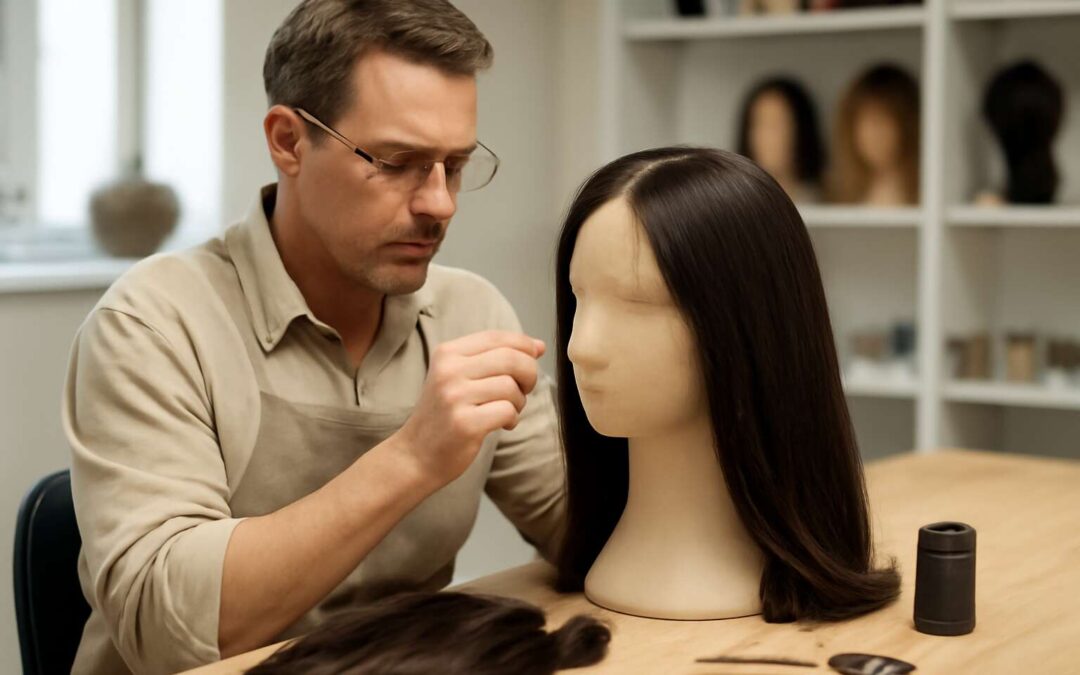
Global Origins: Where Human Hair Wigs Are Made
Key Regions and Manufacturing Hubs
Wigs travel a long road from the raw strand to the finished product. Inquiries often start with “where are human hair wigs made,” and the answer spans several regions. The journey blends time-honored craft with high-volume production, delivering options for both boutique salons and mass-market retailers. What a journey!
Key regions and manufacturing hubs include:
- China — the Guangdong and Zhejiang hubs drive large-scale processing, dyeing, and distribution to global suppliers.
- India — Tamil Nadu and Mumbai serve as major sourcing and processing centers with a mix of traditional craftsmanship and modern facilities.
- Vietnam and Indonesia — finishing, assembly, and rapid shipping keep pace with demand.
- Latin America — donor hair origins from Peru and Brazil support premium textures and blended looks.
For South Africa, this global map translates into local partnerships, traceable supply chains, and a growing appetite for ethically sourced, high-quality hair that reflects diverse identities.
Hair Sourcing: From Donor to Factory
Across the global wig market, premium strands travel through a dozen checkpoints before they reach a salon chair. In audit-reinforced supply chains, roughly 60% are traceable from source to shelf. ‘where are human hair wigs made’ is a question that spans donor networks, mills, and finishing rooms—the craft and the scale working in tandem!
From donor to factory, origins matter. Hair is collected with consent, sorted by texture and grade, and processed in facilities that blend time-honored trimming and modern quality controls. In South Africa, partnerships emphasize transparency, local skill development, and clear documentation to reassure clients about traceability and ethics.
- Donor sourcing and consent through ethical programs
- Sorting, grading, and pre-cleaning for texture and quality
- Processing, dyeing, and assembly in controlled facilities
- Quality checks and supplier audits before shipment
Historical Trends in Wig Production
Global origins of human hair wigs weave a story as intricate as the strands themselves. The question “where are human hair wigs made” is answered by donor networks, mills, and finishing rooms spanning continents. Historically, wig production followed fashion’s evolving appetite—from royal courts to contemporary salons—yet the thread remained intimate, shaped by culture, craft, and care. Today, the industry prizes transparency and ethical sourcing, marrying time-honored trimming with modern quality controls to honor both donor and wearer.
- Late 19th–early 20th centuries: centralized mills and global trade routes
- Mid–late 20th century: growth of processing hubs in Asia and Africa
- Recent decades: emphasis on traceability, consent, and regional ethics
In South Africa, partnerships prioritize transparency, local skill development, and clear documentation to reassure clients about traceability and ethics. The result is a woven narrative where origins remain visible at every stage, a shared memory carried from donor to finishing room.
Regional Specialties and Product Variations
In the question where are human hair wigs made, a global chorus of hands answers in whispers of silk and careful precision. Across continents, donor craft mingles with modern processing, giving every crown its own regional signature. From the sunlit markets of India to the finishing rooms of South Africa, origin and artistry intertwine in a transparent, ethical tapestry that honors both donor and wearer.
- India and Nepal: donor networks and texture mapping that honor curl pattern
- China and Southeast Asia: centralized processing hubs shaping density, shine, and durability
- South Africa: rigorous traceability, local skill development, and clear documentation
Product variations echo local artistry: textures calibrated to regional tastes, finishings tuned for climate, and ethical practices woven into every stage of the journey from donor to crown.
The Manufacturing Process: From Raw Hair to Finished Wig
Sourcing, Sorting, and Quality Assessment
Where are human hair wigs made? The answer is a backstage ballet of sourcing, sorting, and exacting quality checks. In South Africa’s bustling beauty industry, factories treat each strand with respect, because a single misstep shows up on a cap faster than a fashion blogger spots a faux pas.
- Sourcing and donor verification
- Sorting by length, curl, color, and batch
- Cleaning, conditioning, and aligning cuticles
- Wefting, cap construction, and threading for integrity
Quality assessment is the finale: tests for colorfastness, tensile strength, and cap fit. When this QA ritual passes, the wig steps from workshop to showroom—proof that where are human hair wigs made remains less mystery and more meticulous artistry.
Hair Preparation and Processing Techniques
The quiet question where are human hair wigs made drifts through a Cape Town workshop, where raw strands become living sculpture. Hair preparation begins with cleansing, conditioning, and a patient alignment of cuticles—an unseen prelude that turns chaos into velvet, one strand at a time.
Processing techniques follow, measured and meticulous:
- Detangling and conditioning to restore sheen
- Cuticle alignment for uniform glide
- Wefting and cap construction to ensure durability
- Color and texture refinement after cleansing
From there, the finished wig steps into showrooms, where lighting honors the craft and mirrors reveal its iron heart. We guard this journey, a quiet, nocturnal testament to skill and patience, honoring every strand that travels from raw origin to wearable crown.
Wig Construction Methods: Lace, Full Cap, and Monofilament
Where are human hair wigs made? In our Cape Town workshop, the journey from raw strand to wearable crown unfolds with quiet, precise care. A seasoned technician often says, “Precision starts at the root.” Donor hair is sorted, measured, and aligned to preserve natural movement and shine before it ever leaves the workbench.
From raw hair to finished wig, construction dictates how it wears. We offer three core methods to balance comfort and realism:
- Lace
- Full Cap
- Monofilament
Each method shapes lift, ventilation, and scalp appearance, matching South African climates and lifestyles. The result is a crown that feels as natural as it looks!
Quality Control and Final Inspection
“Precision starts at the root,” a seasoned technician murmurs as the first strand meets the loom. From our Cape Town workshop, the journey from raw hair to wearable crown unfolds in quiet, exacting steps.
From raw hair to finished wig, the craft moves through disciplined moments: sorting, cleaning, and alignment, then cap construction and ventilation to balance lift and airflow.
- Sorting and alignment to preserve natural movement
- Cleaning and conditioning to remove residues
- Ventilation and cap sewing for breathability
Quality Control and Final Inspection ensure every crown meets our standard: uniform shine, flawless knots, and a reassuring scalp appearance. That answer—where are human hair wigs made—rests in hands that turn science into a whisper of elegance.
Packaging, Labeling, and Shipping Prep
From Cape Town studios to the final box, a wig’s voyage is a quiet, meticulous argument between touch and method. The question where are human hair wigs made becomes a map of disciplined stations, a choreography that honours craft as much as commerce.
Finished wigs face crisp packaging, precise labeling, and careful documentation before they ever leave the workshop. Tamper-evident seals, lot numbers, care instructions, and size codes sit beside country of origin and barcodes, all aligned with South African regulatory expectations.
- Tamper-evident packaging that protects the wig’s finish
- Clear labeling with origin, batch, size, and care
- Compliance documentation and QA certificates
- Inventory-ready shipping preparations and dispatch controls
From dockside to destination, the process leans on precise logistics, climate-conscious handling, and traceability that keeps every crown accountable.
Ethics, Certification, and Sustainability
Sourcing Ethics and Fair Labor Practices
Nearly 3 in 4 South African wig shoppers now weigh ethics as heavily as price, a stat that reshapes the market’s map. The question of where are human hair wigs made reveals a fabric woven from fair donor programs and meticulous studios. Ethics here are not slogans but the quiet pulse behind every strand, guiding humane labor, transparent practices, and communities that stand taller because of shared stewardship.
Certification shines as a tangible beacon, aligning values with practice:
- Fair Trade or donor-rights standards ensuring fair compensation.
- BSCI audits for safe, lawful workplaces.
- ISO 9001 quality management for consistent ethical production.
In South Africa, sustainability sourcing means traceable supply chains, responsible packaging, and ongoing community engagement—ensuring every strand respects people and the planet, with fair labor practices woven into every stage.
Certifications, Standards, and Traceability
Ethics isn’t a garnish; it’s the visible seam in every wig’s story—from donor programs to the studio floor. In South Africa, nearly 3 in 4 wig shoppers weigh ethics as heavily as price, turning a supply chain into a narrative of fairness and respect. When asked where are human hair wigs made, the answer reveals a backstage of consent, humane labor, and communities lifting each other up—quiet, stubborn, and indispensable.
Certification acts as a tangible beacon, translating values into auditable practice. Independent verifications, transparent reporting, and continuous improvement keep producers honest without turning ethics into theatre. A compact checklist helps readers glimpse accountability:
- Independent verifications of facilities
- Transparent reporting across the supply chain
- Ongoing worker welfare assessments
Sustainability, standards, and traceability knit the lifecycle together—packaging, waste reduction, and community engagement not as afterthoughts but as core commitments. Traceable donor-to-factory pathways ensure responsibility travels with every strand, while responsible packaging and local partnerships demonstrate a practical, ongoing stewardship that survives the next fashion cycle.
Environmental Impact and Waste Management
In South Africa, nearly 3 in 4 wig shoppers weigh ethics as heavily as price, turning a product into a promise!
So, where are human hair wigs made? The backstage is a quiet ballet of consent, humane labor, and communities lifting each other up—from donor programs to studio floors.
- Audits and independent facility verifications
- Open, traceable reporting across the supply chain
- Continual worker welfare checks and fair labor practices
Sustainability threads the lifecycle—packaging choices, waste reduction, local partnerships, and responsible sourcing—so that care travels with every strand and meets the moment of South African stewardship as fashion evolves.
Consumer Rights and Brand Transparency
Ethics steers the backstage ballet of wig making. In South Africa, savvy shoppers balance conscience and couture—price matters, yet trust follows care from donor to wearer, not merely from shelf to cart.
Transparency isn’t a buzzword here; demand open records, supply-chain visibility, and ongoing worker welfare checks.
- Open reporting that reaches customers, not only auditors
- Independent verifications of facilities and processes
- Visible commitments to fair labor and safe working conditions
Sustainability threads through packaging choices, local partnerships, and responsible sourcing, ensuring every strand travels with South African stewardship into fashion’s evolving moment. When readers ask ‘where are human hair wigs made,’ they glimpse a network of care spanning donors, studios, and communities.
How to Verify Origin and Make an Informed Purchase
Reading Labels, ‘Made In’ Claims, and Documentation
Across global markets, 28% of shoppers admit origin claims rarely sing true without corroborating paperwork. So where are human hair wigs made? The answer lives in label lore and the quiet documentary trail that follows a product from source to salon. A careful glance tells more than a brand’s gloss.
To pierce the veil, read the packaging for clear cues that honor honesty and traceability.
- Country of origin and factory identity
- Donor-sourcing notes and processing country
- Batch numbers, certifications, and provenance documentation
In South Africa, most reputable suppliers provide English-language labels and accessible documentation to underscore provenance.
Wherever you browse, provenance literacy guides you toward transparent makers and confident purchases.
Verifying Brand Transparency and Factory Ownership
Across markets, 28% of shoppers admit origin claims rarely sing true without corroborating paperwork. It’s not geography that matters—it’s the trail behind a product. It’s essential to ask where are human hair wigs made, because transparency begins with clear labels.
Read the packaging as a map, not a slogan. Print, seals, and codes tell a story of care—how the hair was treated, and how the maker stands by its promises. Labels invite trust through traceable detail rather than gloss.
In South Africa, suppliers provide English-language labels and documentation to underscore provenance. Those papers whisper about reliability, from the origin of the raw material to the hands that finished the final wig. Where are human hair wigs made.
Provincial life teaches patience, and so does proof—quietly linking rural memory with modern manufacturing. The truth lies in a gentle, honest trail from source to salon, visible in every line on the label.
Third-Party Audits and Certifications
Markets glitter with glossy claims, but origin is a memory written in paperwork. The question where are human hair wigs made must be answered with records. Where are human hair wigs made becomes less a slogan and more a map, traced by third-party audits that survive washing and wear. I trust audits from bodies like SABS, SGS, and Intertek to reveal the scope from donor material to final fit, because in South Africa the proof sits in the paperwork, not the promise.
Verification wears its own quiet authority when a certificate is current, clearly scouted, and readily accessible. I look for a documented trail—certificate numbers, expiry, and declared scope—as well as public audit summaries that ensure accountability. If it feels evasive, I pause and ask for the full report.
- Third-party bodies: SABS, SGS, Intertek
- Certificate number, expiry, scope
- Request public audit reports
Common Myths about Origins and How to Spot Scams
Markets glitter with glossy claims, but the question where are human hair wigs made surfaces most honestly when you sift through records. In South Africa, provenance is a memory inked in certificates, not a slogan. A practiced buyer listens for the quiet tick of paperwork that travels from donor to final fit.
To verify origin, the language of certificates—certificate number, expiry, declared scope—and a public audit summary give shape to the story. The documented trail—from donor sourcing to processing and assembly—maps the journey. When bodies such as SABS, SGS, and Intertek stand behind the claims, the map becomes legible and trustworthy.
- Myth: all hair is ethically sourced without verification.
- Myth: “Made in [somewhere]” guarantees quality.
- Myth: labels alone prove authenticity—records are essential.
Spotting scams reveals itself in evasive language, missing numbers, and outdated certificates. Truth wears its own documentation, and there is no substitute for a transparent storyline.