
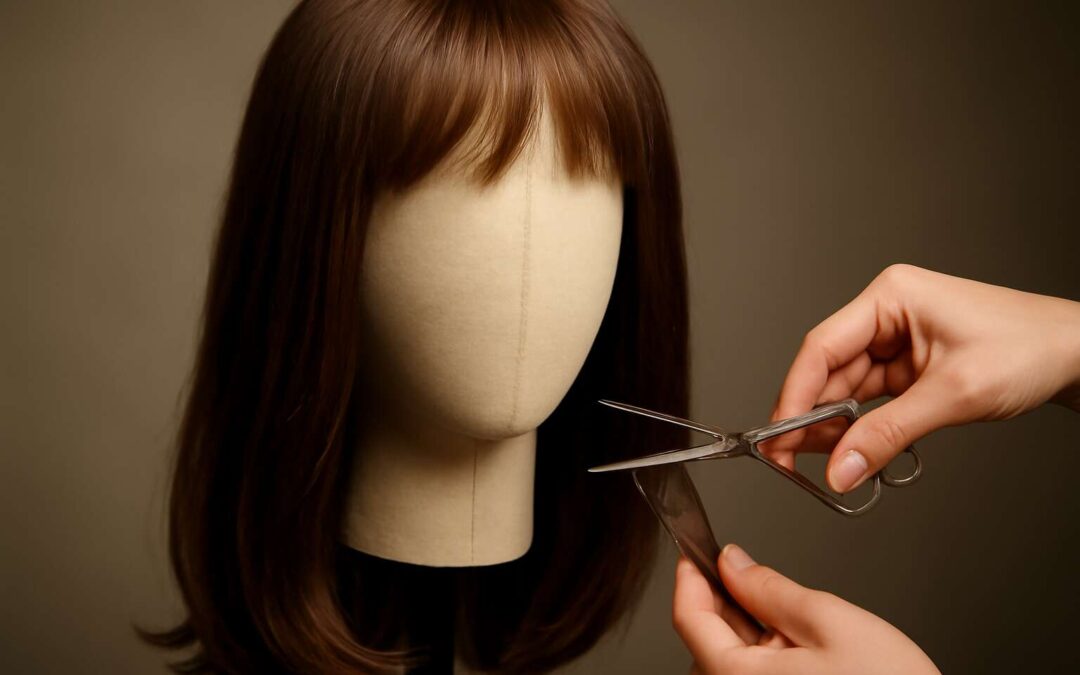
Understanding Wig Cutting Basics
Assessing wig construction and cap type
A single snip can redraw the silhouette, a hush of shine under the SA sun. The question can human hair wigs be cut lingers like a secret whispered at a salon—about technique, cap compatibility, and the dancer-like way hair obeys gravity.
Understanding Wig Cutting Basics begins with assessing wig construction. How fibers anchor and density fall shape any impression the cut will make, so the inner map—where wefts lie and the cap breathes—matters.
- Fiber alignment and density
- Cap construction: lace front, monofilament, or standard weft
- Seam placement and stretch
Assessing cap type reveals how a cut lands on the hairline or crown. The question can human hair wigs be cut—an inquiry that the cap’s design helps answer. Lace fronts offer flexibility; monofilament caps lend a natural part, and full caps add structure. For South Africa’s stylish scene, this vocabulary guides imagination and sparks curiosity!
Evaluating hair length, density, and growth patterns
In a sunlit Cape Town studio, one precise snip can redraw a silhouette and set the room humming with motion. I’ve learned that Understanding Wig Cutting Basics hinges on three quiet narrators: hair length, density, and growth patterns—the trio that whispers how a cut will fall and flow.
Length tells balance, density marks where weight sits, and growth patterns—cowlicks, direction, and whorls—whisper how the strands will behave after the first pass. The question can human hair wigs be cut, and the studio hums with possibility. The answer lies in fiber alignment and gravity at the crown, steering the silhouette toward harmony rather than harsh edges.
Key factors to consider:
- Length and layering goals
- Density distribution
- Growth direction at crown and hairline
In SA salons, this vocabulary helps imaginations dance, aligning craft with gravity and style.
Safety considerations for human hair wigs vs synthetics
In a sunlit Cape Town studio, a single snip tilts the silhouette toward destiny. The question can human hair wigs be cut, and what safety rules guard that choice? The verdict hinges on fiber type, thermal limits, and the quiet mathematics of weight and motion.
Human hair wigs demand different respect than synthetics. Heat tolerance, dye stability, and cap resilience steer how a cut behaves after first contact. The aim is harmony without frizz or sag, a ballet of fibers that remains graceful under routine wear.
Safety considerations at a glance include:
- Heat styling compatibility and tool settings
- Chemical processing and dye behavior
- Cap construction, fiber alignment, and scalp comfort
These differences shape how the cut lands on the head, even in South Africa.
Choosing between a DIY trim or professional service
In a sunlit Cape Town studio, the question can human hair wigs be cut rises like a dare from the mirrored glass: can a silhouette be tuned without losing its whisper of authenticity? Wig cutting basics honor fiber, weight, and balance—a choreography of strands that reads differently from synthetics.
Choosing between a DIY trim or professional service hinges on skill, tool quality, and the wig’s construction. Graceful results depend on length, density, and cap alignment in harmony.
- DIY trims require steady hands and sharp tools.
- Professional service offers balance and a lasting finish.
South African studios blend tradition with modern technique, turning a simple trim into a moment of revision and grace—without sacrificing comfort or continuity of the style.
Cutting Techniques for Different Styles
Basic straight trim for all wig lengths
Precision is the grace note in wig styling, quips a Cape Town stylist. The question behind salon chairs is simple: can human hair wigs be cut without sacrificing texture? The answer sits in a straight trim: a basic technique that suits most wig lengths and keeps the fall natural.
Think of a basic straight trim as a clean line that reinforces density and movement. For human hair wigs, even tension and quality shears matter more than dramatic reshaping. A touch of weight at the ends preserves growth patterns and cap comfort while keeping a polished silhouette.
Possible outcomes of the straight trim for diverse styles include:
- Clean, crisp line that stays stable through wear
- Softer edge for a less blunt look
- Subtle layering to add movement without sacrificing length
In South Africa’s beauty scene, salons balance tradition with modern cut precision, ensuring the wig remains comfortable and believable.
Layering and shaping for volume
Cape Town salons report that 62% of clients crave volume that moves with the head, not bulk that clings to it. Layering and shaping are the quiet couture of daily wigs, reading natural under showroom lights. The question: can human hair wigs be cut without dulling texture? The answer lies in precise layering and edge work.
Cutting techniques for different styles hinge on proportion. For long wigs, soft face-framing layers preserve length; mid-lengths gain lift through gentle graduations; short options rely on stacked layers for buoyant volume.
- Face-framing layers for natural softness
- Graduated crown layers for lift without bulk
- Light texturizing to avoid blunt edges
- Nape shaping to refine silhouette
These techniques offer a wig that feels crafted, with volume that moves gracefully across South Africa’s beauty scene.
Fringe trimming and bangs precision
Fringes ripple like city lights—a deftly trimmed bang can redraw a face with a whisper of drama. In South Africa’s salons, technicians balance risk and romance, shaping a fringe that sits cleanly while staying breathable under scalp light. If you ask, can human hair wigs be cut, the answer lies in precision fringe work that respects cap construction.
Fringe trimming demands discipline and a light touch. The following techniques help artisan clarity:
- Dry trim under natural light to read the fall
- Angle the blades for soft, face-framing edges
- Use point-cutting to avoid blunt, harsh ends
Bottom line: bangs that flatter the brow line blend with longer layers, preserving movement without bulk. A well-cut fringe can be the signature touch of a wig crafted for South Africa’s style scene.
Texturing and thinning for natural movement
Across South Africa, 75% of wig wearers say natural movement is the difference between a look that glows and one that feels stiff. In this craft, cutting techniques become a language of life—how strands breathe as hands, light, and time move around a face.
Cutting techniques for different styles hinge on texture and thinning to invite natural movement. Texturing with careful shear work softens edges; thinning reduces bulk for a lighter crown and kinder fall. can human hair wigs be cut is not a question of capability, but of balance with cap construction.
The beauty of the workshop is quietly domestic: sunlit benches, late-afternoon chatter, a soul finding flow in a wig that matches their everyday rhythm. When fibers are treated with thoughtful texture, the silhouette travels with you, never stiff or flat.
Blunt ends vs soft layers
Across South Africa, 75% of wig wearers say natural movement is the difference between a look that glows and one that feels stiff. Cutting techniques become a language of life, guiding how a wig interacts with light and a smile. For style variety, blunt ends offer a crisp, architectural line that sharpens a silhouette, while soft layers invite movement and air around the face.
When answering can human hair wigs be cut, the balance with cap construction matters more than raw bravado. Blunt ends work best on wigs with sturdy cap support and low-density fringe, preserving a clean edge; soft layers suit mid- to high-density caps, letting the crown float with the wearer’s steps.
- Blunt ends: defined silhouette, minimal bulk
- Soft layers: natural movement, feathered fall
The result is a look that travels with you—never stiff, always present, as if personal rhythm were a cut in thread and time.
Material and Texture Considerations
Human hair vs heat-treated wigs what changes when cut
In a world where every strand whispers a legend, texture is king. A recent salon survey found that 72% of clients say texture shapes confidence more than length.
Material and texture considerations are the compass here. When comparing human hair vs heat-treated wigs, the secret lies in fiber memory. Human hair breathes with natural porosity, absorbing light and settling into believable movement. The question can human hair wigs be cut is often the first thing clients ask, because memory matters.
- Natural movement and fall
- Curl retention and shine
- Weight and drape for balance
For South Africa, this fusion of myth and craft invites every wearer to discover a cape of texture that feels truly yours.
Handling curly, wavy, and straight textures
Texture is the quiet hero of a wig—the difference between “oh, nice” and “wow.” A recent salon poll found 68% of clients say texture shapes confidence more than length, so texture wears the crown. When choosing materials, focus on porosity, fiber memory, and movement, not just shade.
- Curly: expect shrinkage and spring; cut with curl patterns in mind to avoid puff.
- Wavy: preserve buoyancy; snip to maintain soft, flowing lines.
- Straight: emphasize drape and polish with clean, even ends.
In South Africa, this approach invites wearers to tailor texture to climate and face. The practical question can human hair wigs be cut persists, driven by texture and weight.
Edge and knot stability after a cut
Texture is the quiet compass of a wig, guiding how a cut lands and breathes. When trimming, edge stability—the cap’s grip and knot integrity after a strand is altered—decides whether the finish reads sleek or jittery. The honest question remains: can human hair wigs be cut without compromising edge stability? The reply lies in weight distribution and how seams meet the scalp, a measure of fidelity to the weave rather than speed.
- Edge reinforcement at the knot line to maintain polish
- Vent integrity and uniform spacing for natural movement
- Weight balance to preserve fall and conceal scalp lines
In South Africa, heat and humidity color every decision, so salons choreograph texture with climate in mind. Edge and knot stability become more than technique; they become a quiet pact with the wearer’s daily life and self-image.
Aftercare and Maintenance Post-Cut
Washing and drying best practices
“A cut in time saves shine,” the stylist murmurs, and the same truth shines for wigs. After you’ve trimmed, the aftercare ritual breathes life back into the fibers. The question ‘can human hair wigs be cut’ becomes a confident yes, a truth South Africa’s salons test daily when care respects texture and climate!
Post-cut maintenance begins with washing and drying that honor the new silhouette: rinse in cool water, use a gentle sulfate-free shampoo, and apply a light conditioner. Gently blot—do not rub—and let air-dry on a stand. Keep brushes for when the wig is fully dry, bestowing a soft touch and steady movement. I’ve seen how proper air-drying preserves bounce.
When not in use, store on a stand and shield from heat. A light, infrequent styling regime preserves that freshly cut line and respects the wig’s natural movement.
Styling products and heat settings to protect cut fibers
A cut on a human hair wig reshapes confidence—“Texture is sovereignty,” a South African stylist reminds me. In SA, the question can human hair wigs be cut is answered with care and texture in mind, especially when climate tests can stretch the fibers. After the snip, the work continues—maintenance that respects the new line and the wearer’s rhythm.
Post-cut styling revolves around two things: the products that cradle the fibers and heat settings that won’t wisp the shape away.
- Heat-protectant sprays or serums that form a barrier
- Lightweight leave-in conditioners to maintain moisture
- Silk-serum finishing to reduce friction
Keep values gentle: use the lowest effective heat, lean on a cool setting, and avoid repeated passes over the same section—the cut stays alive when restraint guides styling choices.
Storing and preserving cut shape over time
In SA salons, 83% of wearers report that a well-maintained cut adds weeks of confidence; can human hair wigs be cut, the question is answered with care and texture in mind, especially when climate tests stretch the fibers. Aftercare becomes a quiet ritual—staying true to the line, letting the fibers breathe, and letting the wearer’s rhythm guide the next act in the styling saga.
Storing and preserving the cut shape over time is less about drama and more about cadence: keep the crown of the wig supported, avoid crush and friction, and allow room for the fibers to settle into their new silhouette. The cut lives when the environment listens—the cooler shadows, the gentle air, the absence of repeated tugging that might erode the crispness of the line.
When to revisit the cut and possible adjustments
Across South Africa, 83% of wearers say a well-kept cut adds weeks of confidence. The question can human hair wigs be cut is answered with attention to texture and climate—the fibers stretch and bend, and the cut must breathe.
Here are small rituals that keep the post-cut promise alive.
- Let fibers breathe between wears to keep the line crisp.
- Avoid crush and friction with gentle handling and loose coverings.
- Book a professional tweak if you notice growth or weight altering the silhouette.
I watch the wig settle into its new silhouette, adjusting with care rather than force, letting the wearer’s rhythm guide the next styling act.